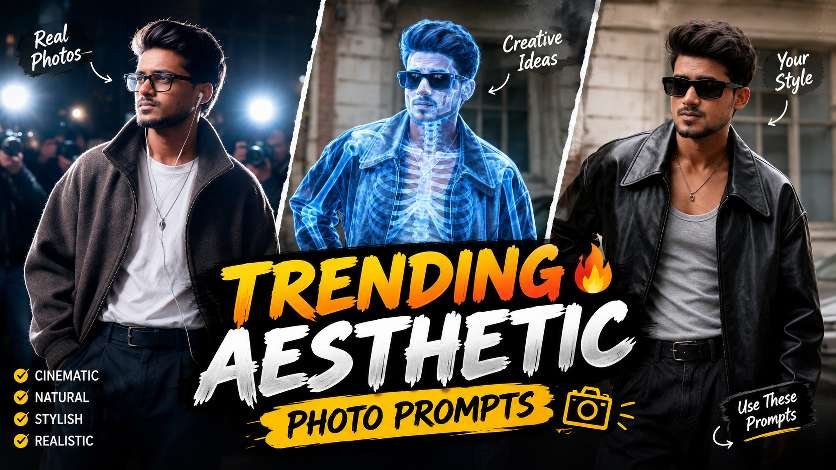
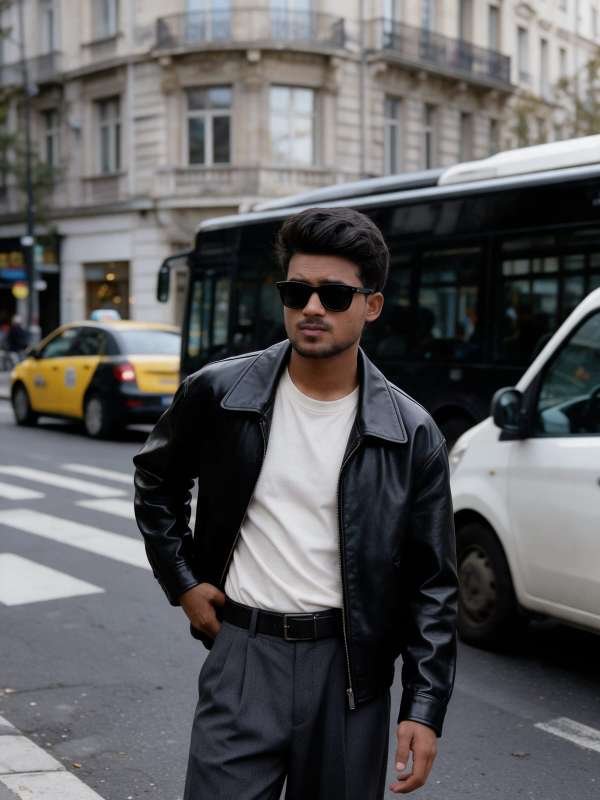
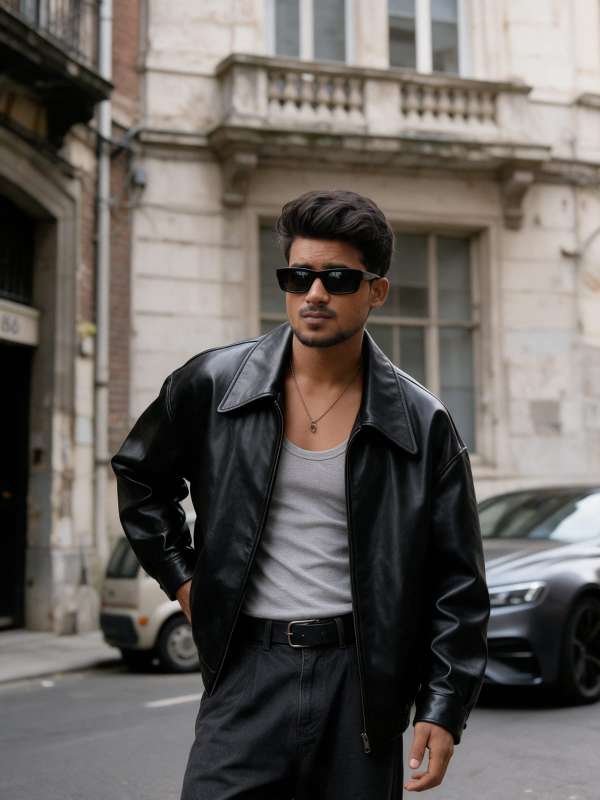
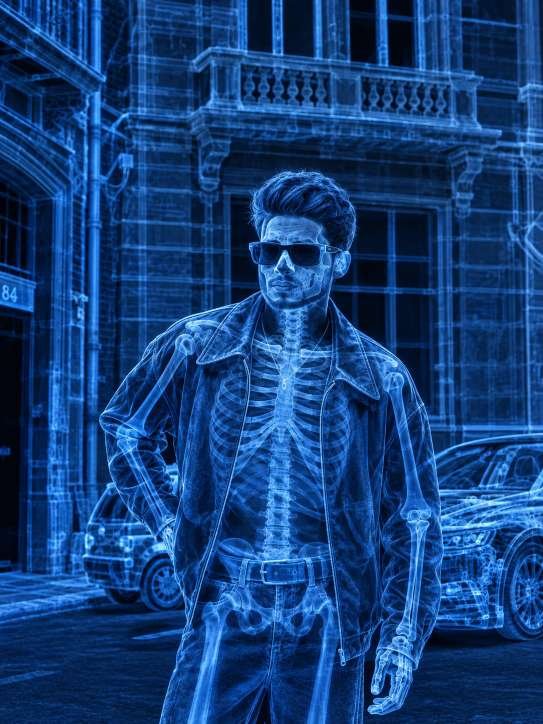
X-Ray photo editing is becoming one of the biggest Instagram trends in 2026. This unique AI effect gives your photo a transparent X-ray look where the skeleton is visible while your face, clothes, and background remain stylish and realistic. Thousands of creators are using this editing style in Reels, Shorts, and profile posts because it looks futuristic and grabs attention instantly.
What Is the Viral X-Ray Photo Editing Trend?
The X-Ray photo editing trend uses AI prompts to transform a normal portrait into a realistic X-ray style image. The effect creates glowing blue bones, transparent skin, and a cinematic appearance without changing the person’s identity. This editing style has become popular because it looks creative and different from regular photo filters.
Why Everyone Is Using This AI Photo Prompt
Instagram users love edits that stand out in the feed. The X-Ray effect combines science-fiction vibes with realistic photography, making it perfect for viral content. Many creators are sharing before-and-after transformations using ChatGPT AI prompts, and these posts are receiving millions of views.
How to Create an X-Ray AI Photo
Start with a clear full-body or half-body portrait taken in good lighting. Upload the image into an AI image generator and use a detailed X-Ray photo prompt. The AI keeps your face and pose natural while adding transparent body details, glowing bones, and a cool blue X-ray effect.
Best Prompt for Realistic X-Ray Editing
Use a prompt that asks for a realistic transparent X-Ray body effect, glowing blue skeleton, preserved facial identity, cinematic lighting, high-detail skin texture, futuristic blue glow, and ultra-HD quality. This creates a professional-looking result suitable for Instagram and YouTube thumbnails
Tips to Make Your X-Ray Photo Look More Viral
Choose a dark or urban background because the blue X-Ray glow becomes more visible. Wear simple clothes and keep the pose confident for a stronger effect. Adding soft cinematic lighting and high contrast makes the edit look even more eye-catching.
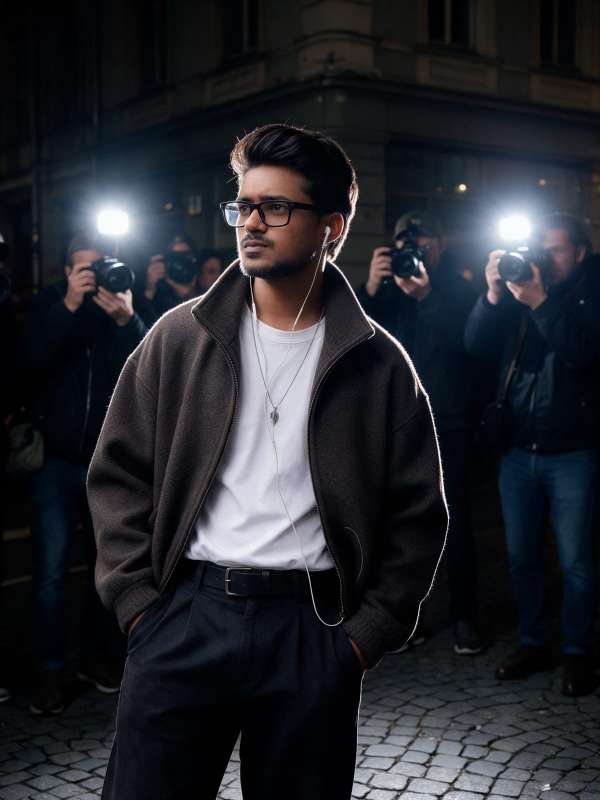
Use my uploaded photo as the ONLY base image and preserve the original photograph exactly.
EDIT ONLY THE BACKGROUND LIGHTING AND ADD PAPARAZZI.
1. ORIGINAL PHOTO — 100% LOCKED
Keep my original photo unchanged as the foundation.
Do NOT regenerate or replace the subject.
Do NOT change my face, identity, facial features, skin texture, hairstyle, beard, eyes, nose, lips or jawline.
Do NOT beautify, smooth, sharpen, reshape, slim or modify my face.
2. BODY & POSE — 100% LOCKED
Keep my exact original body proportions and natural physique.
Do NOT make my body broader, muscular, heavier or slimmer.
Keep my exact body position, hand position, leg position, posture and movement.
Do NOT change my pose or body angle.
3. CAMERA & COMPOSITION — 100% LOCKED
Keep the exact original camera angle, perspective, focal length, framing, crop, image ratio and subject scale.
Do NOT zoom out.
Do NOT zoom in.
Do NOT crop or reframe the original photograph.
The subject must remain in exactly the same position and size.
4. LOCATION — 100% LOCKED
Keep the original location, architecture, street, ground, walls and surrounding environment exactly as they are.
Do not replace the location.
Do not redesign the background.
5. ADD NIGHT PAPARAZZI BEHIND ME
Only in the background, naturally add several paparazzi photographers standing behind and around the subject.
They should be positioned at a realistic distance behind me, similar to a celebrity paparazzi scene.
Some photographers should hold professional DSLR/mirrorless cameras with large lenses.
Some cameras should have active camera flashes firing toward the subject.
Keep the paparazzi slightly darker and less prominent than the main subject.
6. CAMERA FLASHES
Add multiple realistic bright white camera flashes from the paparazzi cameras.
Create different flash intensities and positions so they look like real photographers taking pictures simultaneously.
The flashes should naturally illuminate nearby background areas and interact with the environment.
Avoid artificial-looking glowing circles or obvious digital light effects.
7. REALISTIC RIM LIGHT
Create a strong but realistic photographic rim light around the OUTER EDGES of my subject, inspired by a paparazzi flash.
The rim light should appear naturally along the hair, shoulders, outer arms, jacket/shirt edges and sides of the body where a real rear/side flash would hit.
The rim light should be thin, crisp and physically believable — NOT a thick neon outline.
It should look like actual light wrapping around the subject, not an editing stroke.
8. LIGHT INTERACTION
The paparazzi flashes must realistically affect my silhouette.
Create subtle highlights on the outer edges of my clothing and hair.
Add realistic specular highlights where the flash would naturally hit.
Preserve the original shadows and lighting on my face and body as much as possible.
Do not overexpose my face or body.
9. NIGHT CELEBRITY PAPARAZZI ATMOSPHERE
Make the overall scene feel like a genuine nighttime celebrity paparazzi photograph.
Dark atmospheric background.
Bright sudden camera flashes.
Natural contrast between the darker background and illuminated subject.
Cinematic but completely photographic.
No fantasy lighting.
10. PHOTOREALISM
Everything must look like a real photograph captured by a professional camera.
Paparazzi, cameras, flashes, shadows, reflections, rim light and background lighting must have realistic depth, perspective and interaction.
No AI-looking elements.
No CGI appearance.
No illustration.
No excessive HDR.
No fake glow.
MOST IMPORTANT:
Do not alter my original subject in any way.
Do not change my face.
Do not change my body.
Do not change my pose.
Do not change my camera angle.
Do not change my location.
Do not change my framing.
ONLY add realistic nighttime paparazzi photographers behind me and create realistic paparazzi camera flashes/rim lighting around my existing subject.
Most important : don’t crop or zoom. 100% lock original picture
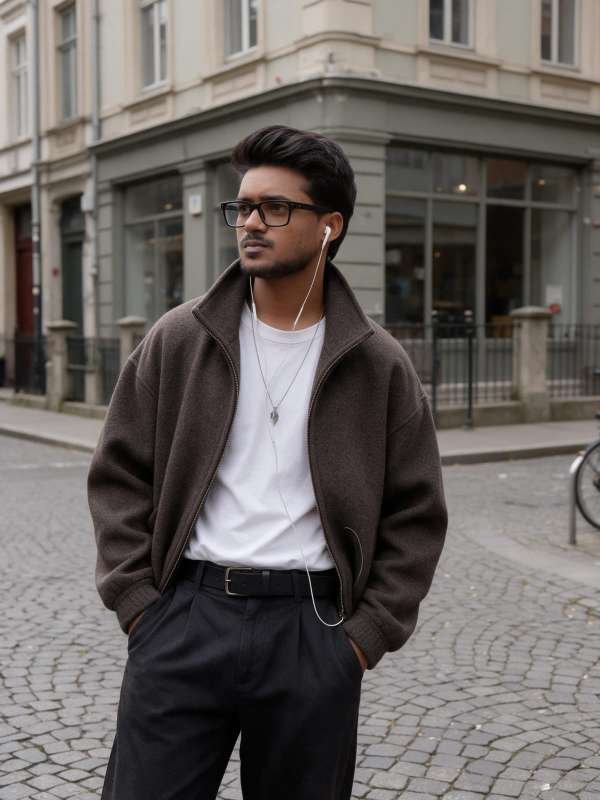
Create an ultra-realistic high-end street-fashion editorial photograph based closely on the uploaded reference image. Recreate the overall composition, camera perspective, pose, styling, environment, lighting and natural photographic appearance of the reference.
1. Subject
One young adult male standing casually outdoors on a European-style city street.
Slim-to-average natural physique.
Realistic human body proportions.
Relaxed, effortless street-fashion presence.
Do not make the body muscular, bulky, broad or artificially enhanced.
2. Pose & Body Position
Subject standing naturally in the center-left portion of the frame.
Body facing mostly toward the camera with a slight sideways orientation.
Head turned toward the left side of the frame, looking away from the camera.
Neutral, calm, slightly distant expression.
Both arms hanging naturally down.
Both hands placed casually inside the front pockets of the trousers.
Shoulders relaxed, not overly posed.
Natural straight standing posture with a subtle relaxed lean.
Legs positioned naturally with a small comfortable separation.
The pose should feel candid and effortless rather than like a studio fashion pose.
3. Face & Identity
If using my uploaded face/photo, preserve my exact identity.
Face 100% locked to the uploaded identity reference.
Preserve exact facial structure, jawline, eyes, nose, lips, eyebrows, skin texture and natural proportions.
No beautification.
No face slimming.
No facial reshaping.
No artificial skin smoothing.
Keep realistic pores and natural skin texture.
Do not change hairstyle or facial features unless specifically requested.
4. Clothing
Oversized/textured dark-brown or charcoal-brown zip-up jacket.
Jacket has a slightly thick, wool-like textured appearance.
High/standing collar partially raised.
Jacket worn open or partially open.
Plain white crew-neck T-shirt underneath.
Loose-fit black/dark charcoal trousers.
Black belt subtly visible at the waist.
Minimal silver necklace/pendant layered over the T-shirt.
Wired white earphones hanging naturally from both ears and down toward the pocket area.
Overall styling: understated European streetwear, muted colors, minimal and sophisticated.
5. Hair & Accessories
Short, naturally styled hair with subtle texture.
Dark rectangular/oval black eyeglasses.
White wired earphones.
Minimal jewelry.
No excessive accessories.
6. Background / Location
Elegant European urban street.
Historic upscale residential/commercial architecture.
Large muted beige/gray-green storefront/window behind the subject.
Detailed classical building façade with decorative architectural molding.
Black metal fencing behind the subject.
Stone/concrete fence pillars.
Narrow cobblestone pavement covering the entire street/foreground.
A partially visible bicycle on the right side of the frame.
Subtle urban details such as windows, doors, cables and architectural elements.
Background should feel authentic and naturally photographed, not digitally constructed.
7. Composition
Vertical portrait composition.
Approximately 4:5 to 9:16 framing, depending on the target image.
Medium full-body / 3/4-body framing.
Subject occupies roughly the central 45–55% of the frame.
Leave enough space above the head and around the subject.
Camera positioned approximately at chest-to-eye level.
Slightly wide smartphone/editorial street-photography perspective.
Keep the subject’s proportions natural.
No excessive wide-angle distortion.
8. Camera & Photography
Ultra-realistic professional street-fashion photography.
Full-frame camera look.
Approximately 50mm lens aesthetic.
Aperture around f/2.8–f/4.
Natural depth of field.
Subject sharply detailed.
Background slightly softened but architectural details remain recognizable.
Realistic lens rendering.
Natural perspective.
High dynamic range.
Accurate skin tones and fabric textures.
Subtle natural photographic grain.
9. Lighting
Soft natural daylight.
Overcast or lightly diffused daylight conditions.
No harsh direct sunlight.
Soft shadows across the face and clothing.
Balanced exposure between subject and architecture.
Natural highlights on the jacket texture and glasses.
No dramatic artificial studio lighting.
No excessive glow or HDR effect.
10. Color Grading
Muted, sophisticated neutral color palette.
Slightly cool/neutral overall tone.
Brown, gray, beige and white dominate the scene.
Natural skin tones.
Slight cinematic contrast.
Subtle filmic color response.
No oversaturation.
No heavy teal-and-orange grading.
No excessive clarity or sharpening.
11. Realism
Genuine professional photograph.
Photorealistic skin, hair, fabric and architecture.
Realistic earphone cables.
Realistic glasses reflections.
Natural jacket folds and wrinkles.
Natural hand and finger anatomy.
Correct body proportions.
No AI-generated appearance.
No plastic skin.
No artificial facial symmetry.
Negative Prompt
cartoon, illustration, CGI, 3D render, AI-looking face, plastic skin, beauty filter, face distortion, altered identity, muscular body, bulky body, exaggerated shoulders, unnatural anatomy, extra fingers, missing fingers, deformed hands, distorted glasses, floating earphones, oversaturated colors, excessive HDR, dramatic studio lighting, fake bokeh, excessive blur, warped architecture, distorted perspective, duplicate objects, unrealistic clothing folds, overly sharp skin, face smoothing, low resolution, watermark, text, logo, social media UI
Most important : keep my face and hairstyle same
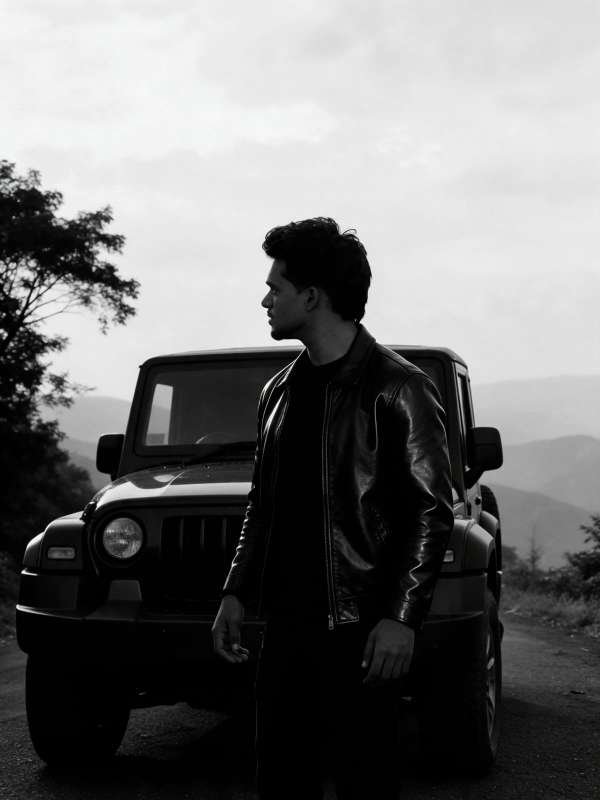
🚀1. Overall Composition
Vertical portrait composition.
framing.
Subject positioned slightly right of center.
Large amount of negative space in the upper half of the frame.
Jeep occupies most of the lower and middle background.
Subject overlaps the right-center portion of the Jeep.
The composition feels like a cinematic outdoor automotive portrait.
The image has a quiet, moody, atmospheric feeling.
2. Camera Angle
Camera is positioned approximately at chest/waist-to-upper-body height relative to the subject.
Perspective is mostly natural, without an extreme wide-angle distortion.
Camera faces the subject and Jeep almost straight-on from the front-right area.
The Jeep is photographed from a slightly low-to-normal perspective.
The subject is captured in a side/back three-quarter orientation, looking away from the camera.
3. Framing
Subject is visible from approximately the head down to below the knees/lower body area.
Jeep’s front is prominently visible.
The top of the frame contains a very large amount of pale sky.
Trees enter from the left edge.
Distant landscape is visible on the right.
The lower frame contains the Jeep’s grille, bumper and road/ground.
No excessive zoom or tight crop around the person.
4. Subject Position & Pose
same as refrence image
6. Clothing — Upper Body
leather shine jacket
7. Clothing — Lower Body
Dark/black pants.
8. Vehicle
Large black/dark-colored off-road SUV/Jeep positioned directly behind the subject.
Vehicle faces toward the camera.
Large upright windshield.
Prominent front grille.
Round headlamp visible on the left side of the frame.
Large rugged front bumper.
Boxy off-road body design.
Dark windshield glass.
Side mirror visible on the right side.
Spare-wheel/side-rear area is partially visible toward the right.
Vehicle has a rugged, adventure-oriented appearance.
Jeep fills much of the lower-middle composition.
9. Vehicle Placement
Vehicle is parked directly behind the person.
Front grille sits around the lower-middle portion of the image.
Windshield occupies the middle section.
Roof runs horizontally behind the subject.
Subject partially blocks the vehicle’s right-front area.
The vehicle acts as a strong visual backdrop and framing element.
10. Background — Left Side
Large mature tree enters from the extreme left.
Additional thinner branches extend upward and toward the center.
Vegetation appears slightly darker than the sky.
Trees create natural framing around the left side of the subject and Jeep.
Background remains relatively uncluttered.
11. Background — Right Side
Distant mountainous/hilly landscape.
Atmospheric haze creates depth.
Trees and vegetation are visible in the distance.
Landscape becomes progressively softer with distance.
Right side has a slightly brighter, mistier appearance.
12. Sky
Very large pale overcast sky.
Sky occupies roughly the upper half of the image.
No strong visible sunlight.
No dramatic sunset colors.
Soft cloudy/hazy atmosphere.
Sky provides strong negative space around the subject.
13. Environment
Outdoor elevated/hilly location.
Natural vegetation surrounding the road.
Rugged roadside environment.
Distant hills/mountains.
Slight atmospheric mist.
Overall setting feels like a hill road or mountain viewpoint.
14. Road / Ground
Dark road surface visible around the bottom and right side.
Uneven natural roadside environment.
Ground contains subtle rough textures rather than a polished urban surface.
Vehicle is positioned directly on the road.
15. Lighting
Soft, diffused natural daylight.
Overcast lighting rather than direct sunlight.
Natural atmospheric light creates depth.
16. Color Treatment
Black-and-white / monochrome treatment.
Slightly cinematic rather than extremely crushed black-and-white.
Fine natural photographic texture remains visible.
.
18. Depth of Field
Subject and Jeep remain relatively clear.
Distant landscape has softer atmospheric detail.
Background trees have some natural softness.
Depth comes more from atmospheric haze and distance than from extremely shallow artificial blur.
19. Image Texture
Natural photographic texture.
Slight grain/noise consistent with a real outdoor photograph.
No glossy artificial skin treatment.
No excessive HDR effect.
No overly sharp AI-generated appearance.
Overall texture should remain realistic.
20. Mood
Quiet.
Moody.
Thoughtful.
Solitary.
Cinematic.
Slightly melancholic.
Adventure/outdoor aesthetic.
Minimalistic rather than flashy.
21. Visual Style
The overall style can be described as:
Cinematic monochrome automotive portrait + mountain-road atmosphere + candid standing pose + rugged off-road vehicle + soft overcast daylight + atmospheric haze + minimalist fashion styling.
22. Important Recreation Rules
If you’re using this image as a reference with your own photo, keep these elements from this reference:
Camera angle
Camera perspective
Framing
Crop
Subject placement
Body pose
Hand position
Jeep placement
Vehicle scale
Background arrangement
Mountain environment
Tree placement
Sky proportions
Lighting direction/intensity
Monochrome grading
Contrast
Atmospheric haze
Depth
Overall cinematic mood
1. Identity — MY PHOTO ONLY
Use my uploaded photo as the only identity reference.
Preserve my exact facial identity and natural appearance.
Do not replace my identity with the person from the reference image.
Do not copy the reference person’s facial identity.
Keep my natural facial proportions, skin texture and recognizable identity.
No beautification, face reshaping, artificial symmetry, skin smoothing or facial reconstruction.
Do not describe or reproduce the reference person’s face.
2. Hairstyle — MY PHOTO ONLY
Preserve the hairstyle from my uploaded photo.
Do not copy, describe or reproduce the reference person’s hairstyle.
Keep my original hair characteristics, length, texture and natural appearance.
No hairstyle transformation unless specifically requested.
3. Overall Composition
Recreate the reference image’s overall composition as accurately as possible.
Match the same camera viewpoint, subject placement, framing, perspective and spatial relationships.
The subject should occupy approximately the same percentage of the frame as in the reference.
Maintain the same amount of visible environment around the subject.
Do not randomly zoom in or zoom out.
Do not change the overall composition.
4. Aspect Ratio & Framing
Vertical portrait composition.
Match the reference image’s vertical framing.
Keep the subject fully framed from approximately head to below the knees / upper legs, according to the reference.
Preserve the same amount of empty space above and around the subject.
Do not crop important parts of the subject or background.
No cinematic widescreen crop.
5. Subject Position
Place me in the same location within the frame as the reference subject.
Match the same approximate distance from the camera.
Match the same body scale and proportions within the composition.
Keep the subject centered/slightly offset exactly according to the reference.
Do not make the subject unnaturally taller, shorter, broader, slimmer or more muscular.
6. Body Pose
Recreate the reference pose very closely:
Standing naturally in the middle of a city street.
Upper body relaxed.
One hand positioned inside/near the trouser pocket.
The opposite arm hanging naturally beside the body.
Shoulders relaxed rather than exaggerated.
Body facing generally toward the camera with a slight natural directional orientation.
Head turned slightly toward one side.
Natural walking/street-style posture rather than a studio-model pose.
Legs positioned naturally with a subtle asymmetry.
Match the reference’s exact hand positions, elbow angles, shoulder orientation, torso angle and leg placement as closely as possible.
Preserve realistic anatomy and natural proportions.
7. Outfit — MATCH REFERENCE
Recreate the clothing from the reference image:
Outerwear
Black leather jacket.
Smooth, slightly glossy genuine-leather appearance.
Structured jacket with a front zipper.
Wide/structured collar.
Natural leather folds and creases around the arms, elbows and torso.
Jacket worn open.
Inner Layer
Plain off-white / light cream crew-neck shirt.
Simple minimal design.
No visible graphics or logos.
Slightly relaxed fit.
Trousers
High-waisted or mid/high-rise dark grey tailored trousers.
Loose, relaxed/wide straight-leg silhouette.
Natural fabric folds around the waist, hips and knees.
Clean tailored appearance without looking like denim.
Belt
Black belt.
Simple rectangular metallic/dark buckle.
Belt clearly visible around the waist.
8. Accessories
Match the reference styling:
Dark black sunglasses.
9. Background / Location
Recreate the same type of real urban European city-street environment visible in the reference.
Include:
Large upscale stone/European-style building facades in the background.
Tall windows and architectural details.
Black decorative metal railings.
Urban street intersection.
Pedestrian crossing / white road markings.
Multiple vehicles surrounding the subject.
Large dark/black bus immediately behind/right side of the subject.
White vehicle in the right foreground.
Yellow-and-black taxi visible toward the left background.
Storefront/commercial signage in the background.
Realistic city traffic environment.
Trees and subtle reflections visible around the vehicles/buildings.
10. Vehicle Placement
Vehicle positioning is important.
Large black bus positioned behind the subject toward the right.
White vehicle positioned in the right foreground.
Yellow taxi positioned toward the left side/background.
Maintain approximately the same relative sizes and positions as the reference.
Do not replace the vehicles with random cars.
Preserve realistic overlap between the subject and vehicles.
11. Architecture
Historic/upscale European urban architecture.
Beige/grey stone facade.
Large rectangular windows.
Decorative architectural details.
Black metal fencing/railings.
Commercial storefronts integrated into the building.
Background should feel like a real photographed city rather than an AI-generated environment.
12. Street
Dark asphalt road.
Realistic road texture.
White pedestrian crossing markings.
Road markings visible around the subject.
Slight natural road wear.
No clean studio floor.
Subject should genuinely appear to be standing on the street.
13. Lighting
Natural overcast/daytime city lighting.
Soft, diffused illumination.
No harsh studio lighting.
Subtle shadows.
Natural highlights on the leather jacket and vehicles.
Soft ambient light across the entire scene.
Preserve realistic exposure similar to the reference.
No artificial dramatic rim light.
No excessive HDR.
14. Reflections
Realistic reflections on the black bus.
Reflections of surrounding buildings/trees/sky should naturally appear on vehicle windows and body panels.
Leather jacket should have subtle realistic reflections.
Sunglasses should have natural environmental reflections.
Avoid fake CGI-looking reflections.
15. Depth of Field
Natural professional-camera depth.
Subject remains clearly detailed.
Background slightly softer but still recognizable.
Vehicles and architecture should remain sufficiently visible.
No extreme artificial bokeh.
Realistic separation between subject and background.
16. Camera Look
Create the appearance of a genuine professional street-fashion photograph.
Full-frame/professional-camera aesthetic.
Natural perspective.
Moderate telephoto portrait perspective.
Approximate 50–85mm equivalent lens look.
Realistic perspective compression.
Sharp subject with naturally softer background.
No fisheye distortion.
No smartphone ultra-wide distortion.
No excessive computational photography.
17. Color Grading
Match the reference’s muted cinematic street-photography color palette:
Slightly desaturated overall colors.
Neutral/cool urban tones.
Natural skin tones.
Deep blacks in the jacket and bus.
Muted grey road and architecture.
Yellow taxi remains naturally noticeable.
Controlled highlights.
Moderate contrast.
Slight filmic character.
No excessive teal-and-orange grading.
No oversaturation.
18. Texture & Realism
Genuine photographic texture.
Natural skin pores and imperfections.
Realistic leather texture.
Realistic fabric texture.
Individual hair strands should remain natural.
Realistic vehicle paint and glass.
Natural asphalt texture.
Realistic environmental details.
No plastic skin.
No AI-smooth face.
No CGI appearance.
19. Perspective & Spatial Accuracy
This is extremely important:
Match the reference image’s perspective rather than simply creating a similar scene.
Maintain:
Same camera height.
Same approximate camera distance.
Same viewing angle.
Same subject-to-camera relationship.
Same foreground/background depth.
Same relative positioning of vehicles.
Same architectural scale.
Same visual balance between subject and surroundings.
20. Final Instruction
Use the reference image as a strict visual blueprint for everything EXCEPT the person’s identity and hairstyle.
My uploaded photo = identity, face, natural appearance and hairstyle.
1. Overall Style
Create an ultra-realistic high-end street-fashion editorial photograph based closely on the uploaded reference image. Recreate the same overall composition, camera perspective, subject positioning, pose, styling, architecture, lighting, colors, depth of field, and natural photographic appearance. The final image must look like a genuine professional camera photograph, not AI-generated or digitally illustrated.
2. Subject
One young adult male standing outdoors on a European-style urban street.
Slim-to-average natural physique.
Realistic human body proportions.
Natural shoulders, arms, chest, waist, and neck proportions.
Do not make the body broader, bulkier, muscular, or heavier.
Maintain a natural, effortless fashion-model appearance.
3. Pose & Body Position
Subject standing casually and naturally.
Upper body slightly relaxed with a subtle forward/sideward orientation.
Both hands placed naturally inside the front pockets of the pants.
Elbows slightly bent outward.
Shoulders relaxed rather than squared.
Head slightly tilted/downward.
Face angled subtly toward the camera.
Relaxed, serious, understated expression.
Recreate the same body posture and overall silhouette as the reference.
Do not introduce a different pose, hand position, leg position, or body movement.
4. Framing & Composition
Vertical fashion photograph.
Approximately waist-up / 3/4-body framing, with the lower portion extending toward the bottom edge.
Subject positioned near the center of the frame.
Head located around the upper-middle portion of the image.
Leave enough environmental space around the subject to clearly show the architecture and parked cars.
Preserve the reference’s close, immersive street-photography composition.
No excessive zoom-out.
No unnecessary cropping.
5. Camera Perspective
Eye-level to slightly low camera perspective.
Camera positioned fairly close to the subject.
Natural perspective with realistic proportions.
Moderate compression similar to an approximately 50–85mm full-frame lens.
No extreme wide-angle distortion.
Subject should feel naturally integrated into the environment.
6. Hairstyle
7. Face & Identity
If using a user’s uploaded photo as the identity reference:
Preserve the user’s exact facial identity.
Face 100% locked to the uploaded identity reference.
Do not alter facial structure, proportions, jawline, eyes, nose, lips, or overall facial geometry.
Preserve natural skin texture, pores, and small imperfections.
No beauty filter, face smoothing, artificial symmetry correction, face slimming, or facial enhancement.
The sunglasses may partially obscure the eyes naturally, but the underlying facial structure must remain unchanged.
8. Expression
Calm, serious, slightly mysterious fashion-editorial expression.
Lips naturally relaxed.
No smile.
No exaggerated emotion.
Head slightly lowered, creating a subtle cool and effortless mood.
9. Sunglasses
Large rectangular black sunglasses.
Thick dark frame.
Dark almost-black lenses.
Sunglasses positioned naturally across the bridge of the nose.
Realistic reflections on the lenses.
No futuristic or oversized cartoon appearance.
10. Clothing — Leather Jacket
Oversized black leather jacket.
Relaxed, slightly boxy streetwear fit.
Soft natural leather texture.
Large pointed/open collar.
Long sleeves with slightly loose cuffs.
Jacket partially open in the front.
Visible natural folds and creases throughout the leather.
Realistic subtle highlights reflecting the ambient daylight.
Dark black color with slightly varied leather tones rather than perfectly flat black.
11. Inner Shirt
Simple fitted white/light-gray sleeveless tank top underneath the jacket.
Clean minimal design.
Natural fabric texture.
Slightly visible neckline and upper chest.
Tank top should remain mostly concealed by the leather jacket.
12. Necklace
Thin delicate metallic chain around the neck.
Small simple pendant hanging around the upper chest.
Natural positioning and subtle metallic reflection.
Do not make the necklace oversized or visually dominant.
13. Pants
Black/dark charcoal trousers or jeans.
Relaxed straight-to-loose fit.
Natural fabric folds around the waist and pockets.
Dark monochromatic styling matching the jacket.
Waist area naturally visible beneath the open jacket.
14. Hands
Both hands naturally inserted into the front pockets.
Fingers should be anatomically correct.
Natural wrist and hand proportions.
No distorted fingers, extra fingers, fused fingers, or unnatural hand shapes.
Hands should look relaxed rather than tightly gripping the pockets.
15. Architecture / Background
Historic European urban architecture.
Aged stone/plaster building facades.
Weathered beige-gray walls with visible natural aging and texture.
Ornamental architectural details.
Decorative stone balcony with classical balustrade.
Large windows and traditional European building elements.
A darker doorway visible on the left side.
Small building number plaque reading “86” on the left-side wall.
Mix of beige stone, gray weathered surfaces, and reddish-brown brick elements.
Background should feel like an authentic European city street, not a digitally constructed set.
16. Parked Cars
Several realistic modern cars parked along the street behind the subject.
Beige/tan compact car visible toward the left/lower background.
Dark gray luxury sedan/coupe visible toward the right.
Natural reflections on vehicle windows and body panels.
Cars should remain slightly less prominent than the subject.
Realistic street-level perspective.
17. Street Environment
Narrow urban European street.
Authentic pavement and curb.
Subtle everyday city details.
No crowds dominating the scene.
Quiet, sophisticated metropolitan atmosphere.
Environment should feel naturally photographed rather than staged.
18. Lighting
Natural soft daylight.
Slightly overcast / diffused daylight quality.
Soft shadows rather than harsh direct sunlight.
Natural highlights on the leather jacket and hair.
Gentle ambient light across the face and clothing.
Preserve darker shadows underneath the jacket and around the architecture.
No artificial studio lighting.
19. Color Grading
Cinematic muted urban color palette.
Warm beige and gray architectural tones.
Deep blacks in the leather jacket and sunglasses.
Slightly desaturated overall colors.
Natural skin tones.
Subtle film-like contrast.
No excessive HDR.
No neon colors or artificial oversaturation.
20. Depth of Field
Subject remains sharply detailed.
Background moderately blurred but still recognizable.
Natural optical depth of field.
Soft separation between subject and architecture.
Realistic bokeh around distant cars and background elements.
Avoid excessive artificial blur.
21. Image Quality
Ultra-high-resolution professional photography.
Extremely realistic skin texture.
Detailed leather texture.
Realistic hair strands.
Accurate fabric texture.
Natural reflections on sunglasses and cars.
Physically realistic shadows and highlights.
Subtle authentic photographic grain.
22. Camera Look
Professional full-frame camera aesthetic, approximately 50–85mm lens, around f/2–f/2.8, natural perspective, realistic optical compression, sharp subject with moderate background separation, natural dynamic range, documentary/editorial street-fashion photography.
23. Realism Requirements
Photorealistic human anatomy.
Natural skin pores and texture.
Realistic leather reflections.
Realistic fabric wrinkles.
Accurate hands and fingers.
Realistic hair strands.
Natural environmental reflections.
No plastic skin.
No CGI appearance.
No artificial face enhancement.
No exaggerated muscularity.
24. Composition Lock
Recreate the reference composition as closely as possible: same approximate camera height, subject scale, subject placement, head position, body orientation, hand placement, background architecture, parked-car arrangement, and visual balance. Do not randomly change the camera angle or reposition the subject.
25. Negative Prompt
Avoid: cartoon, illustration, 3D render, CGI, AI-looking skin, plastic skin, excessive skin smoothing, beauty filter, face reshaping, face slimming, body enhancement, muscular body, broad shoulders, oversized muscles, distorted anatomy, extra fingers, missing fingers, malformed hands, duplicated objects, warped architecture, extreme wide-angle distortion, excessive HDR, oversaturation, excessive blur, artificial bokeh, unrealistic leather, floating objects, incorrect shadows, different pose, different hand position, different camera angle, excessive zoom-out, unnecessary crop, low resolution, unnatural facial expression.
Most important : keep my face and hairstyle, Eyes and nose sharp focus and same, add Highlights and shadow to Match with background
Transform the provided image into a realistic RAY SCAN version of the exact same image. Treat the original image as a completely locked composition. Preserve the exact camera angle, perspective, framing, crop, lens perspective depth, subject positioning, body pose, object placement, proportions, scale and spatial relationships. DO NOT move, resize, rotate, reposition, replace or redesign anything in the image. The only change should be the visual transformation from a normal photograph into an X ray scan.
Convert every visible subject, object and environmental element into its appropriate X ray interpretation, based naturally on what that element is. If there is a human or animal in the image, reveal the anatomically correct internal skeletal structure beneath the body. Show the skull, spine, rib cage, shoulders, arms, hands, pelvis, legs, joints and other visible bones naturally aligned to the person’s exact original pose. The skeleton must perfectly track the original body position and proportions. Preserve the body’s outer silhouette as a very dark, subtle translucent outline surrounding the internal skeleton.
If there are objects such as luggage, bags, boxes, electronics, furniture, watches, cameras, shoes or other products, make their exterior surfaces dark and semi transparent while revealing believable internal components, structures, materials and contents appropriate to that specific object. If there is a vehicle, reveal realistic mechanical structures such as the chassis, engine components, suspension, wheels, seats, wiring and internal construction while maintaining the exact vehicle silhouette. If there is a building or architectural structure, reveal its structural framework, beams, columns, pipes, wiring, floors, walls and internal construction naturally within the existing geometry. Apply the same logic automatically to ANY type of object present in the image. Determine what the subject is and reveal the believable internal structures that would naturally exist inside it. The result should look like the entire original photograph was captured using an advanced cinematic X ray scanning system.
VISUAL STYLE
Use a strict BLACK AND BLUE X RAY COLOR PALETTE. The image should be predominantly deep black and near black. Internal bones, structures, mechanisms, edges and important scanned details should glow in varying intensities of electric blue, deep blue and cold luminous blue. Bones should be clearly visible and brighter than surrounding soft tissue.
Dense materials should appear brighter blue while thinner or less dense materials appear darker and more translucent.
Exterior surfaces should remain extremely dark, semi transparent and ghostlike so the internal structures become the main visual focus. Use natural X ray density variation, overlapping translucent layers, subtle volumetric depth and realistic penetration through materials. Maintain strong contrast with a mostly black image and controlled blue illumination. Do not turn the image into a neon illustration or cyberpunk artwork. It must still feef like a believable medical, industrial or security X ray scan, only presented with a cinematic black and blue aesthetic. Keep fine internal details extremely sharp and intricate. Preserve the original depth of field relationships where possible while making the X ray structures readable.
ABSOLUTE COMPOSITION LOCK
The final X ray image must perfectly overlay the original image if both were stacked on top of each other. Every person must remain in the exact same location and pose. Every object must remain in the exact same location. Every background element must remain in the exact same location. Keep the exact original framing. Keep the exact original aspect ratio:
Keep the exact original perspective. Keep the exact original camera position. Keep the exact original proportions. Do not zoom. Do not crop. Do not reframe. Do not change facial or body proportions. Do not change poses. Do not simplify the scene. Do not remove background elements. Do not add new objects. Do not alter the environment. Do not change the composition. Do not create a different scene. Only convert the existing image into its black and blue X ray equivalent, revealing the anatomically, mechanically or structurally appropriate internal details of everything already present in
Most important : xray effect should be perfectly fits on subject and car accurate 100% same
Conclusion
The viral X-Ray photo editing trend is one of the easiest ways to create futuristic AI images for Instagram. With the right AI prompt and a clear portrait, you can generate a stunning transparent X-Ray photo that looks unique, realistic, and ready to go viral on social media.